
For this particular assignment I had many different ideas of what to cook and at a point it got so confusing that I had no idea what to make. So I just decided to walk around St. Lawrence to look for some sort of inspiration. And there it was, right in from of me, something I always wanted to cook, but never had a proper access to back in my home country of India. A beautiful piece of beef tenderloin. Something that I also learned that day was that this was an expensive piece of meat. I ended up spending $28 for a kilo of it. Easily one of the most expensive meals that I would cook. This means that I have one chance to have a go at it and not mess it up. (Spoiler alert, I didn’t mess it up)
Beef
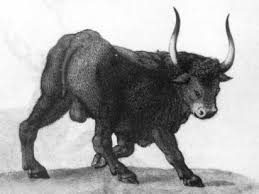
Beef is basically meat that is obtained from a cow. The cattle of today are a progeny of the wild European Aurochs. Compared to the cows of today, they were about 1.5 times bigger and weighed close to a ton. Humans began its domestication about 8000 years ago. Most of the beef and dairy bearing cows are related to the European breed (Princess royal station 2015).
Some of the largest producers of beef on a global level are Australia, the USA, Canada, Argentina and Uruguay. India is one of the countries that produces a large quantity of the meat, but it ranks among the lowest when it comes to the consumption of it (Bali 2015).
The Tenderloin
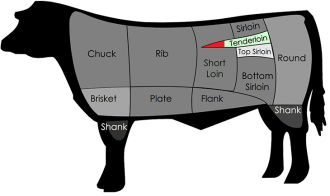
Beef tenderloin is the tender-most part of all the other cuts. The tenderloin is a little oblong in its shape and spans both into the short loin and sirloin section of the cow. interestingly the T-bone and porterhouse are cut out from the short loin section of the cow. We know that the tenderloin extends into the short loin section. This contributes to a piece of tenderloin in both T-bone and porterhouse steaks. The T-bone actually separates the tenderloin and a New York strip (Subia 2019).
The tenderloin can be further cut down into four more cuts. The head, chateaubriand, tournedos and filet mignon (Bali 2015). This meat contains a bit of fat marbling between the meat, although not as much as other cuts. This makes it very popular among the crowd that likes to consume steak but are watching their fat intake levels. The steak made from this cut contains even less fat than the equal weight of chicken thighs (Subia 2019).
Cooking methods
Before we get into the perfect way of cooking a beef tenderloin, we need to understand a few things not to do with the precious cut. It is very crucial that you do not overcook the meat in any way. This cut is very lean and has very little fat in it. this means that if you cook it perfectly, it is the most tenderest cut to chew on. But if you overcook it, it becomes dry and tough in its texture. Another mistake that you might do is not season the meat enough. The tenderloin does not have a lot of fat to depend on for its flavor. This makes seasoning the meat very crucial (Gallary 2014).
The best way you could cook a tenderloin is by dry heat method such as baking, roasting, grilling the steak, etc. After cooking in this process, make sure that you let the meat rest for at least 10 to 15 minutes for the meat to reabsorb all of its juices. Other methods such as stewing is also acceptable, but the meat does not extract a lot of flavor in the stew and there is a high possibility of overcooking it.
Beef Wellington
The method that I have selected for my recipe is the dry heat method and the dish is beef wellington. I can safely say that this is a dish that has been on my mind for a very long time. The first time I learnt about this dish was from season 2, episode 2 of Master Chef Australia back in 2010. Most of the recipe that is followed here is inspired from Gordon Ramsay. (Video of the full recipe: https://www.youtube.com/watch?v=Cyskqnp1j64&t=192s )
For this recipe you will require:
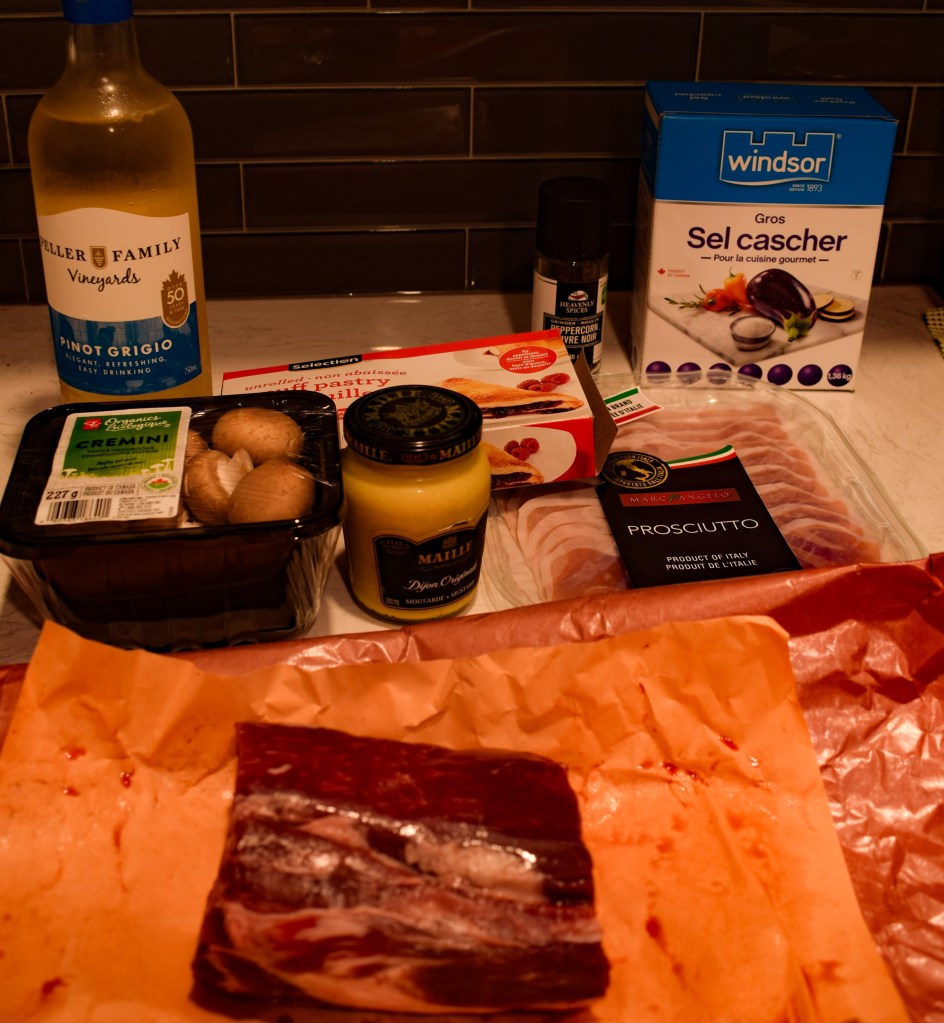
Lets look at this one layer at a time:
At the centre
- Olive oil 1 tbsp
- Beef tenderloin 1 kg
- Salt and pepper
- Dijon mustard 2 tbsp
First layer (Mushroom duxelle)
- Cremini mushrooms 500 g (other types or mixture of different mushrooms will also work)
- Dry white wine 1/4 cup
- Fresh rosemary
Second layer
- Prosciutto 8 slices
Final layer
- Puff pastry, as per required
- Kosher salt
- Yolk of one egg
Method
- Season the tenderloin generously with salt and ground black pepper. Add olive oil in a hot pan and place the meat in it. You should hear a sizzle. We just want to sear the steak and give it a nice brown color on its exterior. Use tongs for this process
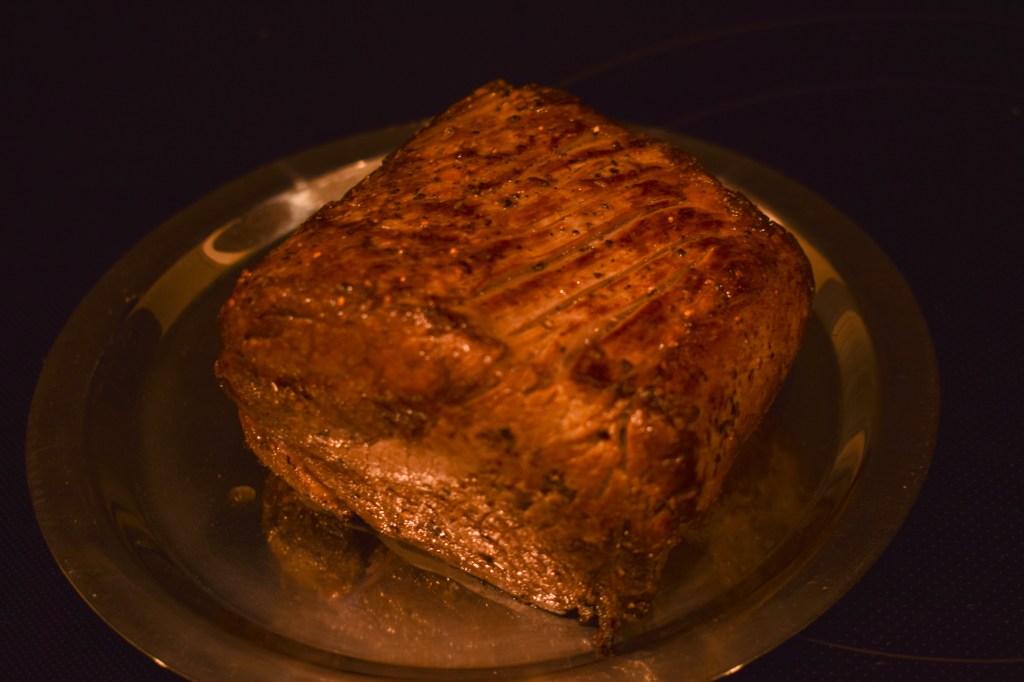
2. Once that is done, transfer this meat to a plate and brush it completely with Dijon mustard. Keep it aside to rest.
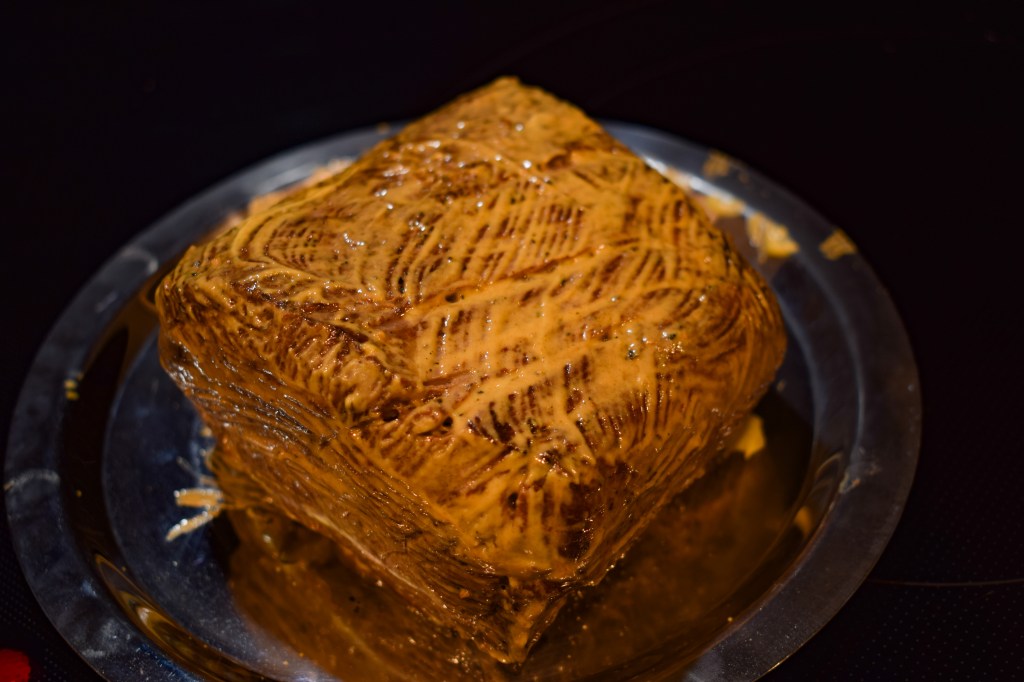
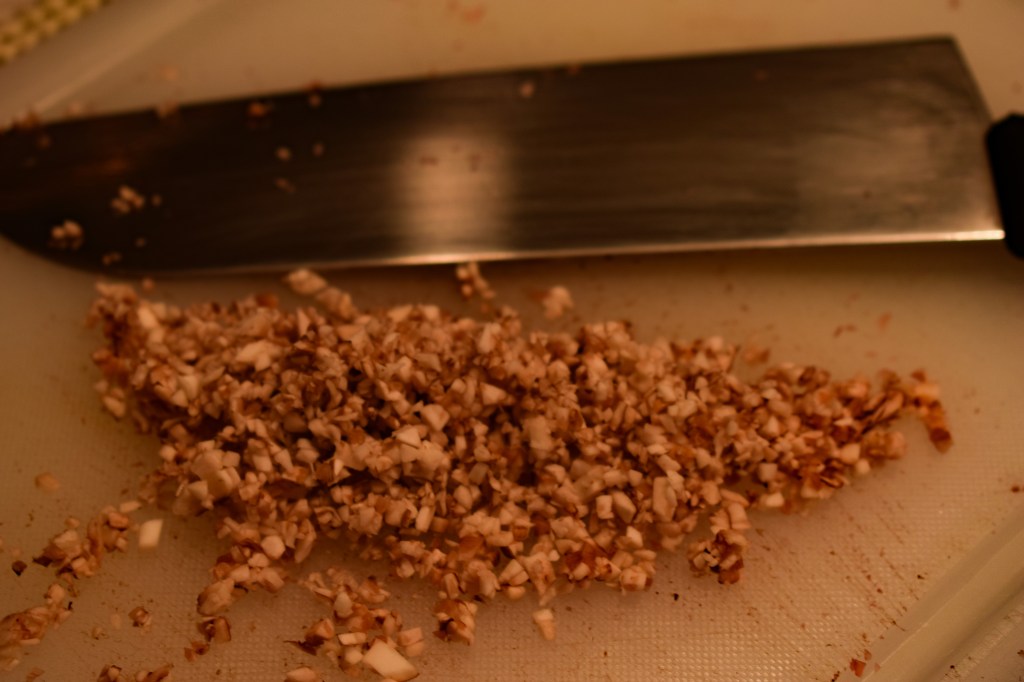
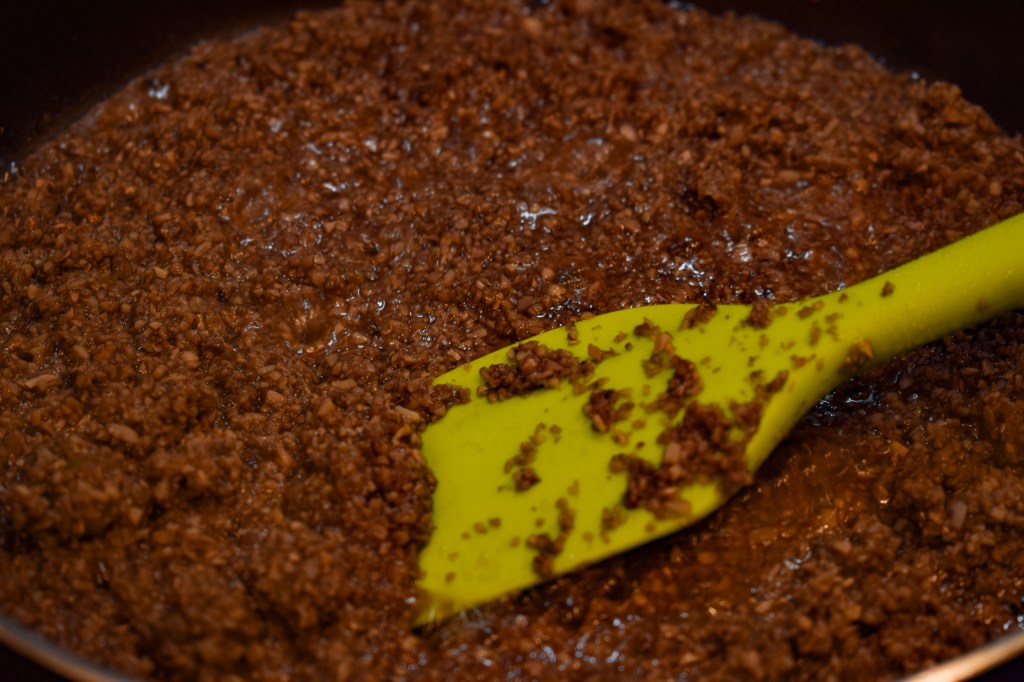
3. In a food processor, blend the mushrooms till they are very finely chopped. If you do not have a food processor this can be done on the chopping board and knife (took me an hour). Place this mushroom in a hot pan, without any oil, season it and start to toss it around the pan. As the moisture is starting to ooze out, add some rosemary and white wine in it. Cook this mixture till all the moisture has evaporated and you are left with a thick paste. Set aside to cool.
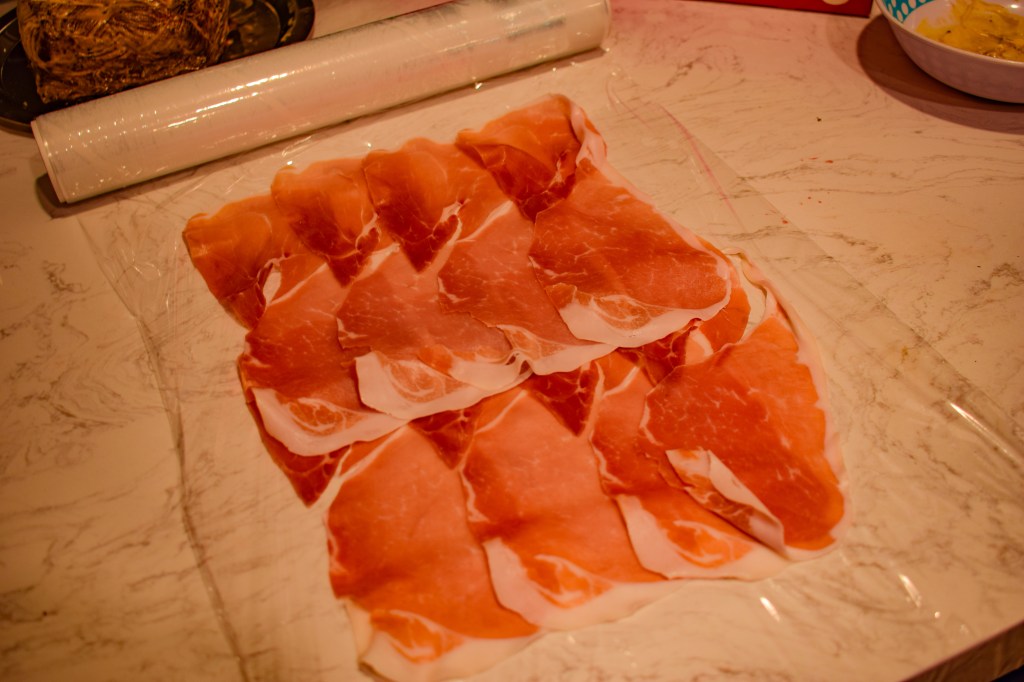
4. Spread cling wrap on your chopping board or your table, layer the Prosciutto on it in a neat manner. On this spread the mushroom duxelle, use the back of your spoon to make it very even.
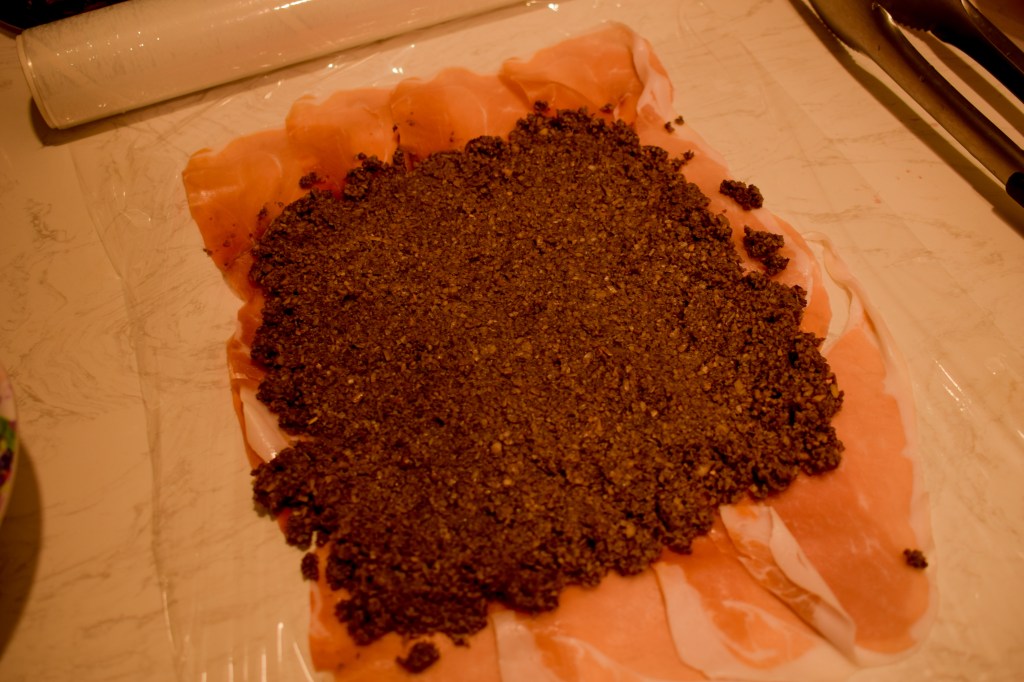
5. Place the meat onto the mushroom duxelle, with the help of the cling film, wrap the beef completely. At the edges, with the help of the cling film, twist it and make the roll very tight.
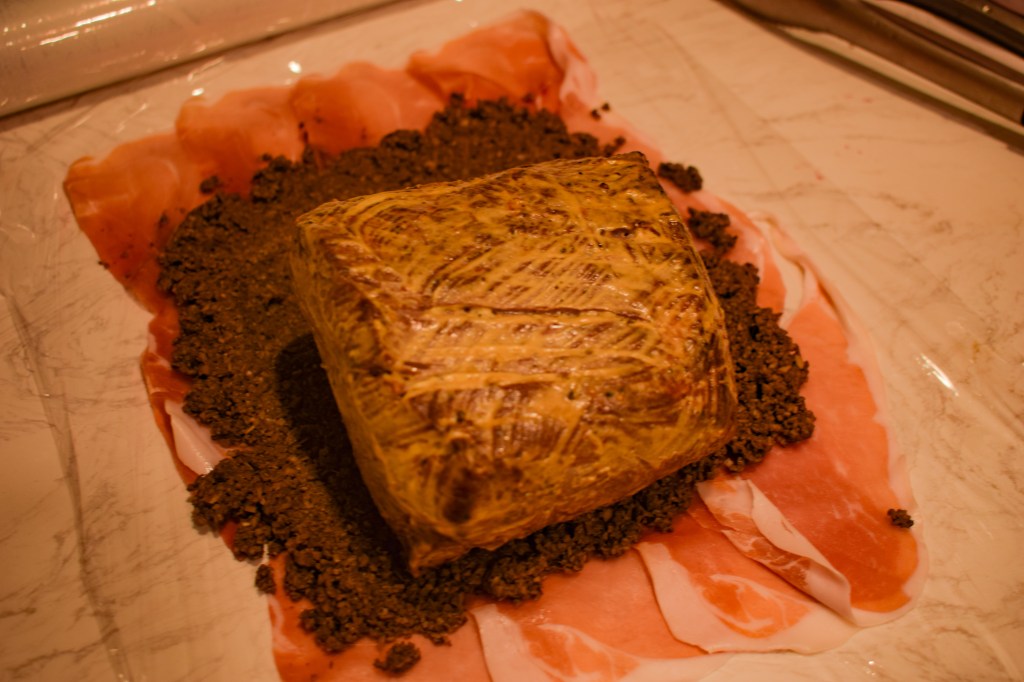
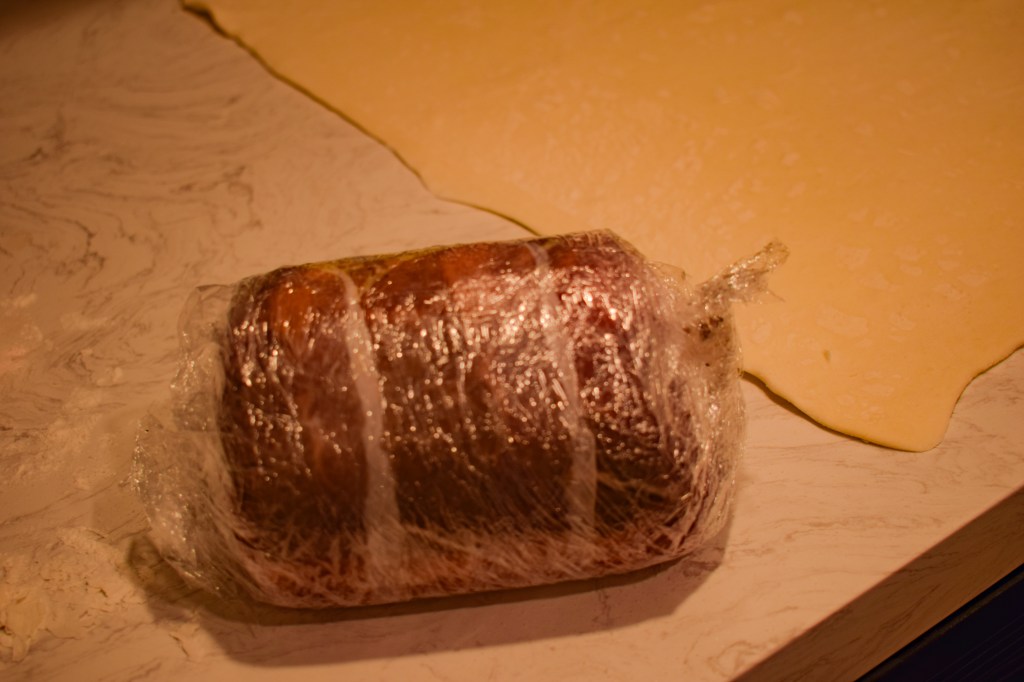
6. Refrigerate this for 15 minutes for it to set. Again set your table with the cling film and place puff pastry sheet on it. (If you are buying frozen puff pastry from the store, let it thaw in the fridge till it is soft. After this, roll it till it is at least 2 mm thick. Dust it with flour while rolling) Place the beef wrapped with the Prosciutto and mushroom onto the puff pastry. Give an egg wash (1 egg yolk and 1 tbsp of water) at the edges for the puff pastry to seal properly. Like before, with the help of cling film, twist at the edges and make a nice even roll. Place in the fridge for 5 more minutes for further setting.
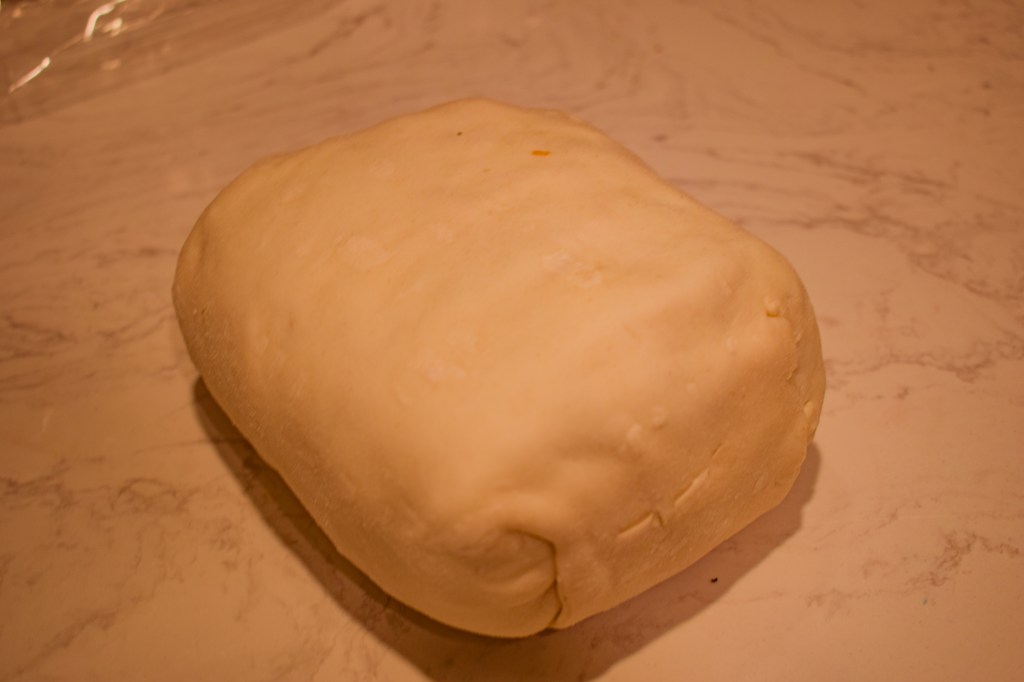
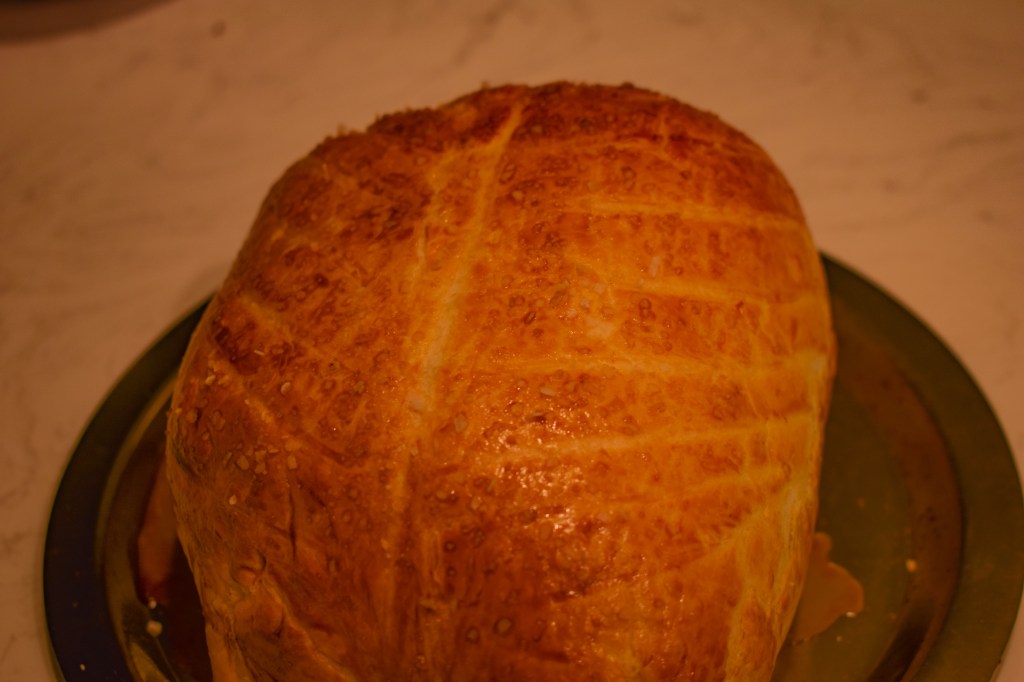
7. Oven should be pre-heated to 200°C (392°F). Give an egg wash to the roll and then gently score it to give it a simple design. Sprinkle with kosher salt to ensure crispiness. Bake for 35 minutes or a little longer if you do not like it rare.
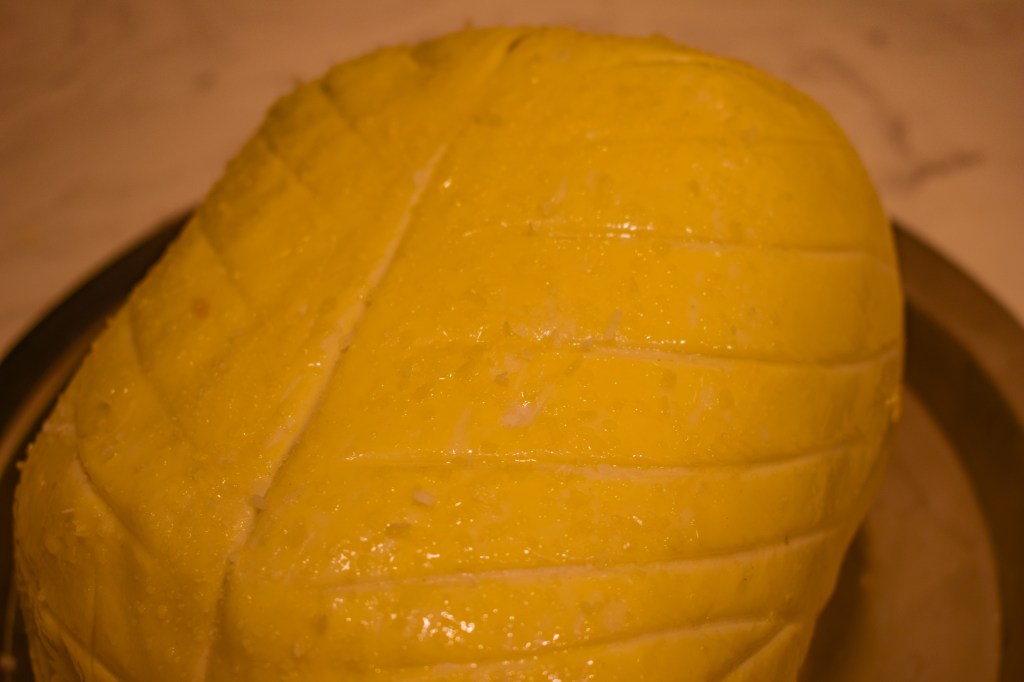
8. After baked, place the wellington on a chopping board. It is very important to let it rest for at least 10 minutes. This will allow all the moisture to be reabsorbed in the meat. Use a bread knife for slicing, and make sure that you get thick slices (at least 2 inches). If you make it too thin, the meat will dry out quick. You can make a jus in the pan that was used to sear the tenderloin. It will go well with the dish.
Positives
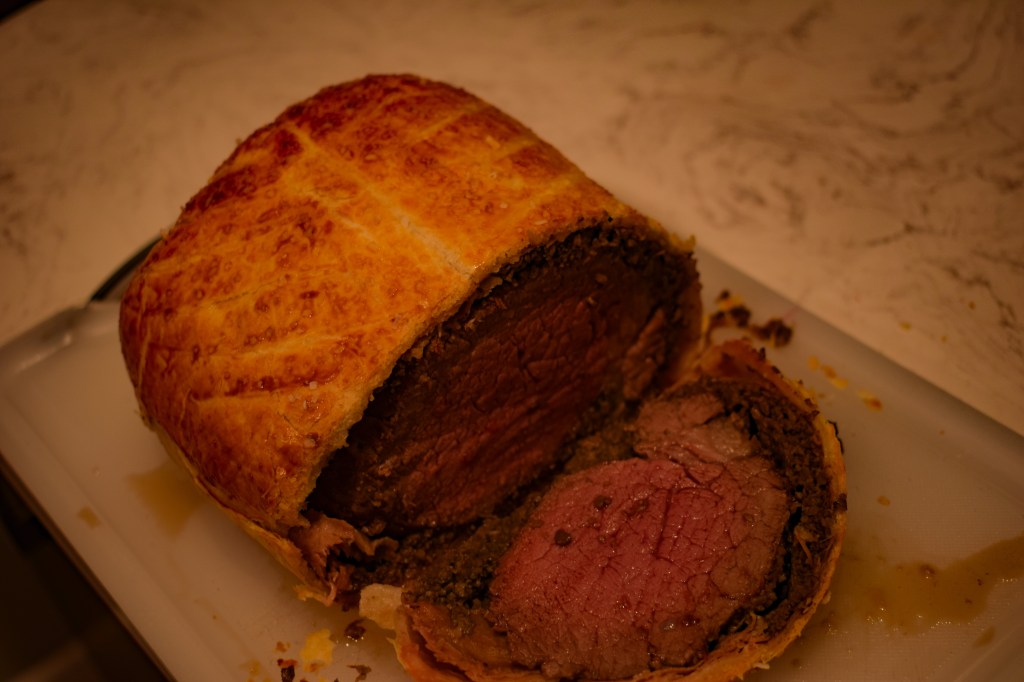
- For starters, I was very pleased with the color of the center of the wellington. It was spot on to the color I was trying to achieve. Very moist in the center and very tender.
- The dish in all was seasoned very adequately.
- The salt on the top of the puff pastry helped in making it very crispy in its texture.
Negatives
- There was a bit of silver skin still left on the meat. This is very chewy to eat and should not be swallowed. Try to trim out all of the silver skin if possible, or ask the butcher to do it while buying it.
- The mushroom duxelle was not covered all around the meat. Make sure that you spread the mushroom enough to cover the tenderloin completely.
- The shape of the meat was not uniform. Because of this the meat on the inside was not cooked evenly. To avoid this, truss the meat before you sear it. But make sure that you do not forget the strings before wrapping and rolling it. You will find this video a little helpful in understanding how to truss a beef wellington: https://www.youtube.com/watch?v=rFIwbUBiRSE
This dish did not turn out to be the most perfect beef wellington. But most of the components turned out right and it was definitely very delicious, so I would conclude this attempt as a success.
References
Bali, P.S. (2014) Food production operations , 2nd edn., India: Oxford university press
Gallary, C. (2014) 5 Common Mistakes to Avoid When Making Beef Tenderloin, Available at: https://www.thekitchn.com/5-common-mistakes-to-avoid-when-cooking-beef-tenderloin-tips-from-the-kitchn-214074 (Accessed: 2019).
Gordon Ramsay. (2018) CHRISTMAS RECIPE: Christmas Beef Wellington, Available at: https://www.youtube.com/watch?v=Cyskqnp1j64 (Accessed: 2019).
LeCordon Bleu (2011) How to Tie a Roast with a String, Available at: https://www.youtube.com/watch?v=rFIwbUBiRSE (Accessed: 2019).
nationalpost.com (2019) Scientists edge closer to bringing back the aurochs, the fearsome cattle breed last seen in the 1600s, Available at: https://nationalpost.com/news/world/scientists-edge-closer-to-bringing-back-the-auroch-the-fearsome-cattle-breed-last-seen-in-the-1600s (Accessed: 2019).
Princess, R.S. (2015) A Brief History of Beef, Available at: https://www.princessroyal.com.au/blog/a-brief-history-of-bee f (Accessed: 2019).
Subia, T. (2019) Beef Filet Tenderloin Steak, Available at: http://www.topratedsteakhouses.com/beef-filet-tenderloin / (Accessed: 2019).
 Theory Of Food